Freight Invoice Verification vs Freight Audit: Timing and Coverage Matter More Than the Label
Blog · 20 October 2026
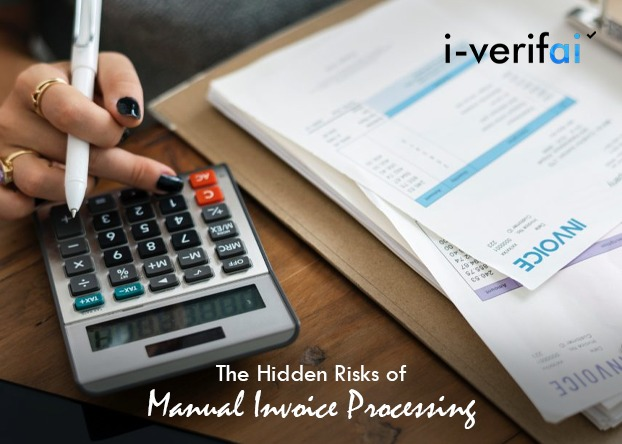
Most articles on freight invoice verification vs freight audit spend their time on definitions. I think that's the wrong debate. What decides how much money you keep is simpler: do you check charges before you pay them, and do you check every line or just a sample?
I've spent about 20 years in freight, logistics operations and cost recovery. I've run national freight operations and group transport planning at JB Hi-Fi, worked in cement transport at Boral, and today I lead iVerifai, so I'm not neutral on this topic. But the pattern is easy to spot. We live in a fast-paced world geared to "tick & flick": invoices get a glance, an approval, and everyone moves on. Nobody is careless. There's simply too much to do.
The definitions, briefly
Freight invoice verification checks a carrier's invoice against what was agreed, line by line: contracted rates, the shipment record, fuel levy and accessorial terms, and earlier invoices to catch duplicates.
A freight audit is the broader review: spend by carrier and lane, charge patterns, service performance, disputes and recoveries.
In practice, vendors use the two terms loosely, and many treat verification as one part of an audit. So don't buy on the label. Ask what actually happens, and when.
My view: the audit label can hide the timing
Here's the part some people disagree with. Plenty of "freight audits" are run after payment. They review invoices that have already been paid, then chase refunds from carriers. That has value, but it's recovery, not prevention, and disputes can take weeks to resolve. Stopping a dollar before it leaves is easier than getting it back.
The second issue is coverage. Based on the figures we shared in our recent webinar, fewer than 10% of shipments get audited line by line at most companies. So for a team relying on "tick & flick" plus an occasional audit, most invoice lines never get a proper look. Billing errors and overcharges are typically estimated at 3-8% of freight spend, which adds up quickly.
The third is simple. Companies put months into negotiating carrier rates, then pay invoices without confirming the charges match them. You can win the negotiation and still lose the money.
Where the money leaks
Errors cluster where charges are easy for carriers to apply and hard for customers to check:
- Ancillary charges: layover, tailgate, residential delivery, re-delivery, and fuel levy applied to the wrong service. Separately from the 3-8% above, accessorials can quietly make up 20-30% of total freight spend if left unchecked.
- Rate mismatches: the invoice doesn't match the contract.
- Duplicates: the same shipment billed twice.
- Detention and demurrage: waiting fees that pile up unnoticed until the invoice lands.
Domestic transport charging is complex, costly and slow to verify by hand. Manual checking doesn't scale past a handful of shipments a day, and by the time someone notices, the money has gone.
Where freight audit and payment software fits
This is why freight audit and payment software exists. It brings invoices, shipment data and contract rates together so that every line gets checked, not just a sample, and errors are flagged for dispute before invoices are approved.
When evaluating any tool, I'd ask three questions:
- Does it check every line, or only flag samples?
- Does it check before you pay, or only after?
- Does it check against your actual contract rates, not generic benchmarks?
Dashboards and reports come after those three. A good report on invoices you've already paid is still a look in the rear-view mirror.
Where I'd push back on myself
A traditional audit still matters. Reviewing spend patterns informs rate negotiations, and tracking carrier performance matters too, because without scoring, underperforming carriers often keep winning your volume. But those insights are only as reliable as the invoice data underneath. Get verification right first, then layer the audit on top.
Which do you need?
- A few carriers and low volume: start with invoice verification before payment.
- Higher volume, many carriers, manual processes: freight audit and payment software is usually the practical route.
- Already verifying every line: add audit-style analysis for negotiation and carrier performance.
If you want to know how certain you can be that you're being charged correctly, the quickest way is to check your own invoices. The iVerifai team is happy to show you how line-by-line verification works.
FAQ
Is freight invoice verification the same as a freight audit?
Not exactly, but the terms overlap and are used loosely. Verification checks each invoice before payment. An audit is broader and includes patterns, performance and recovery. Always ask a provider what is included.
What is freight audit and payment software?
It's a category of software that verifies carrier invoices against agreed rates and terms and flags errors for dispute. Some tools also support the payment step, so features vary by provider.
Is a pre-payment or post-payment audit better?
Pre-payment prevents the overcharge, so there's nothing to recover. Post-payment can still recover money, but it takes longer and isn't guaranteed. Many teams use both.
Why aren't manual invoice checks enough?
They don't scale and usually cover only a fraction of lines. Errors that aren't caught simply get paid.
How much could we be losing?
Typical estimates put billing errors and overcharges at 3-8% of freight spend, but your actual figure depends on your carriers and controls. Reviewing your own invoices is the only reliable way to know.
Does it work alongside our TMS, and how long does onboarding take?
It depends on your setup. Ask any vendor, including us, how it handles your TMS, carrier invoice formats and onboarding timeline.
WRITTEN BY

Bart Phaosihavong
CEO & Co-Founder, iVerifai



Location
PO Box 6261 Point Cook VIC 3030

info@iverifai.com

Call us on
+61 0408 522 451
Our Customer service team is waiting here to assist you. We’d love to hear from you
Contact Us
PO Box 6261 Point Cook VIC 3030
+61 0408 522 451


© 2023 Copyright by Agency Solutions. All rights reserved.